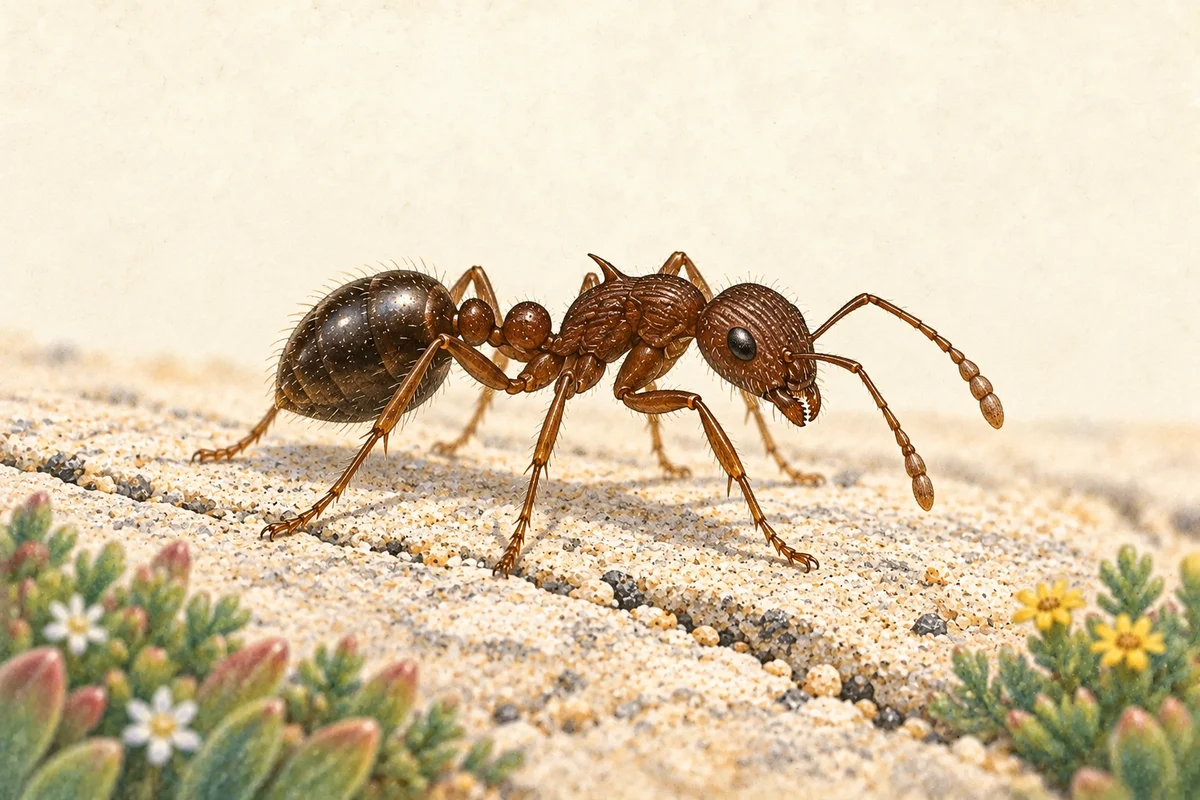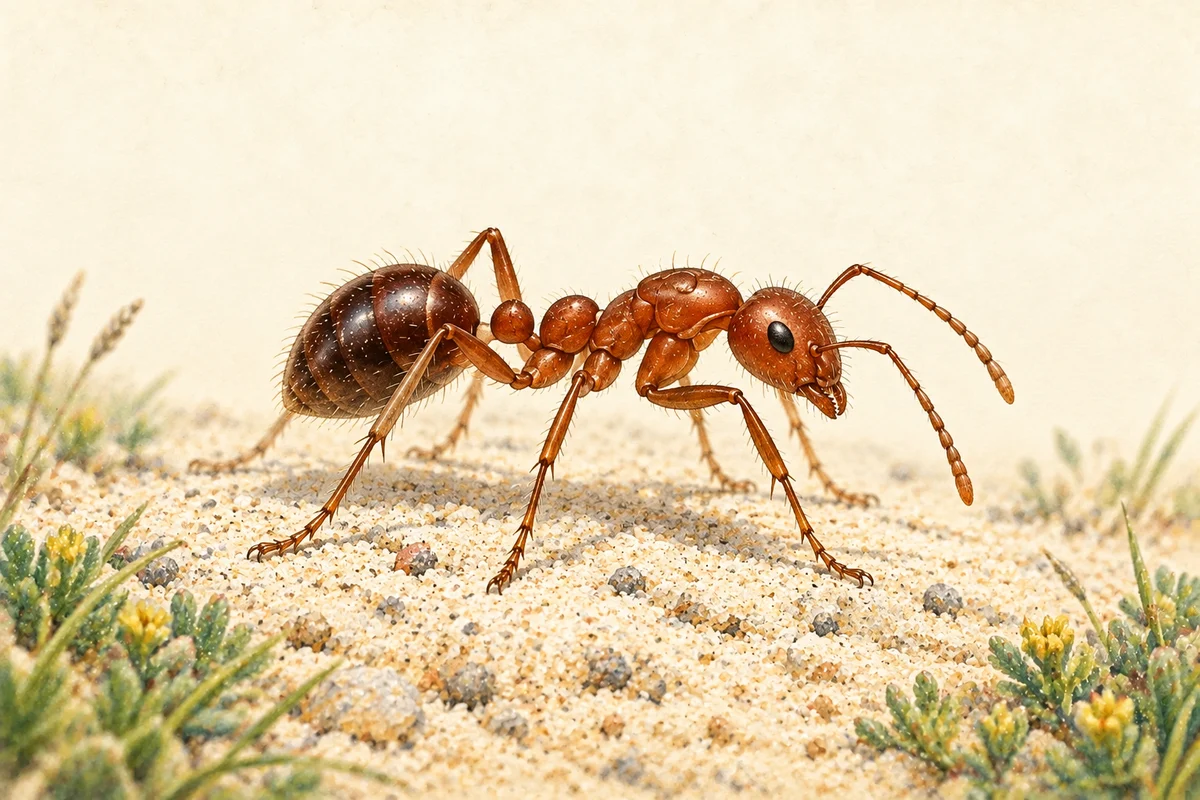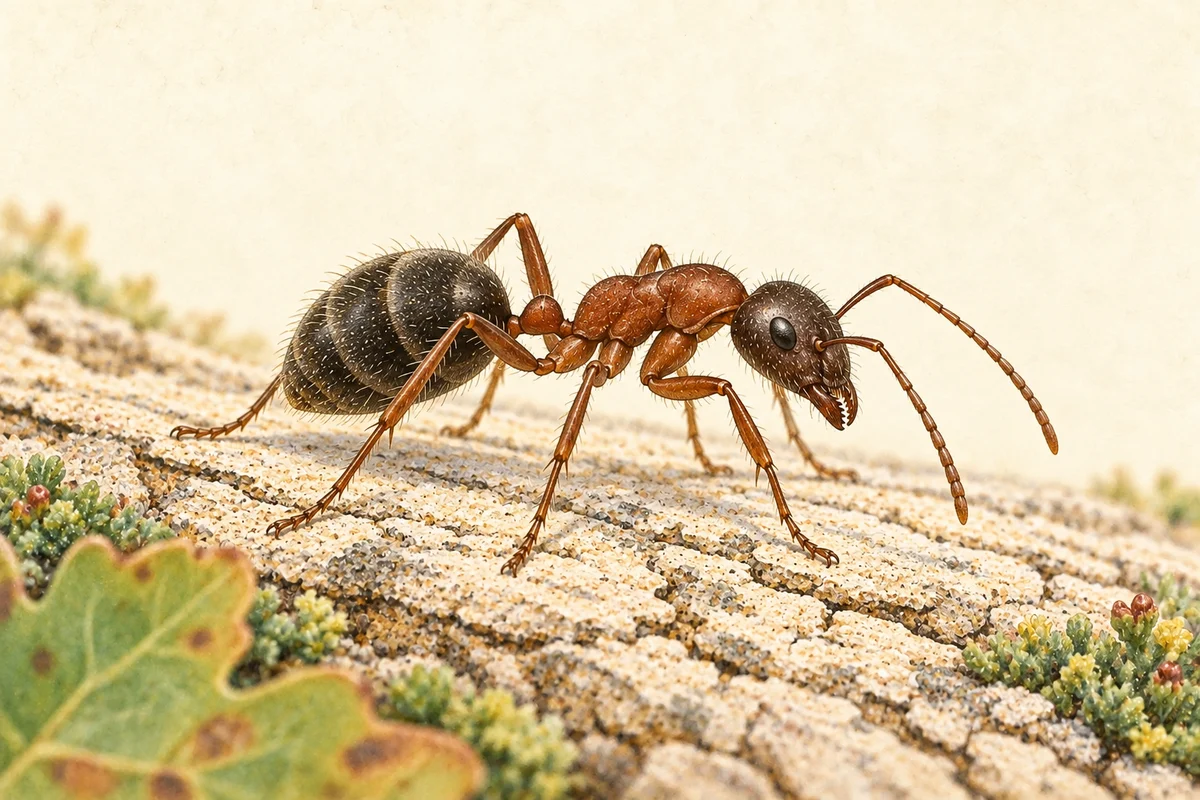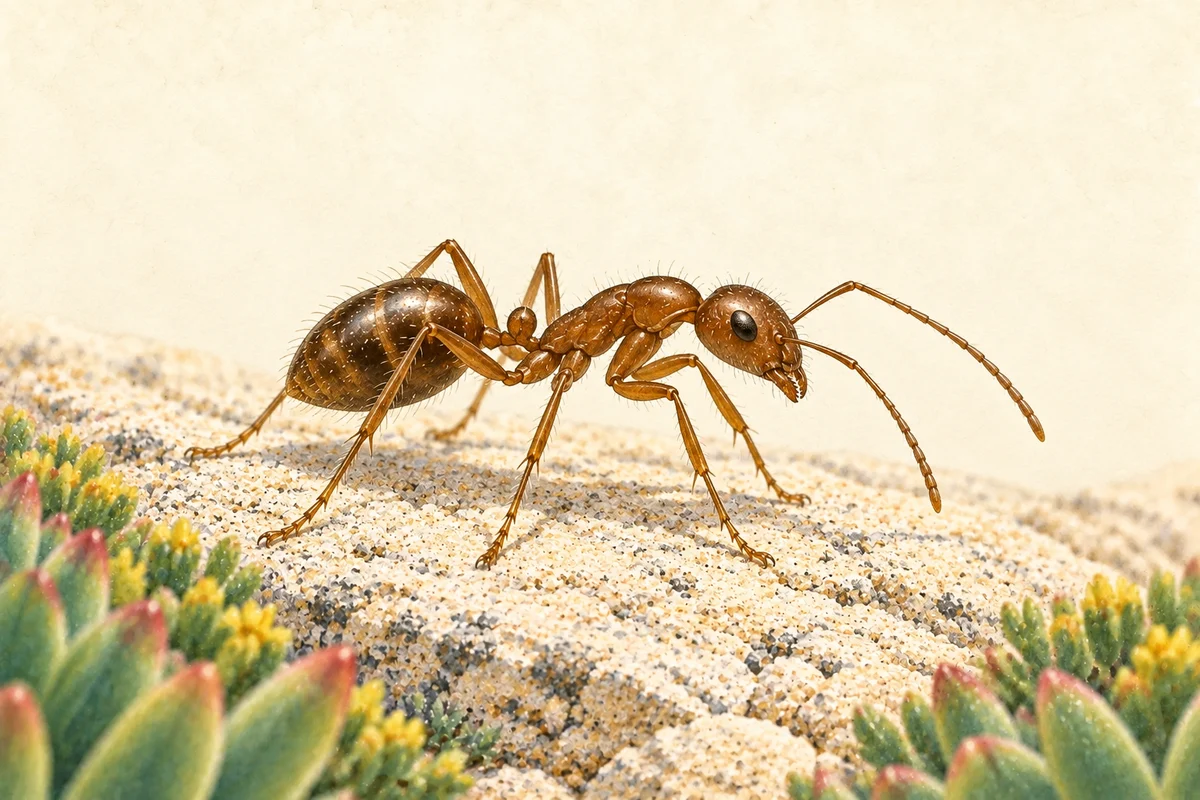
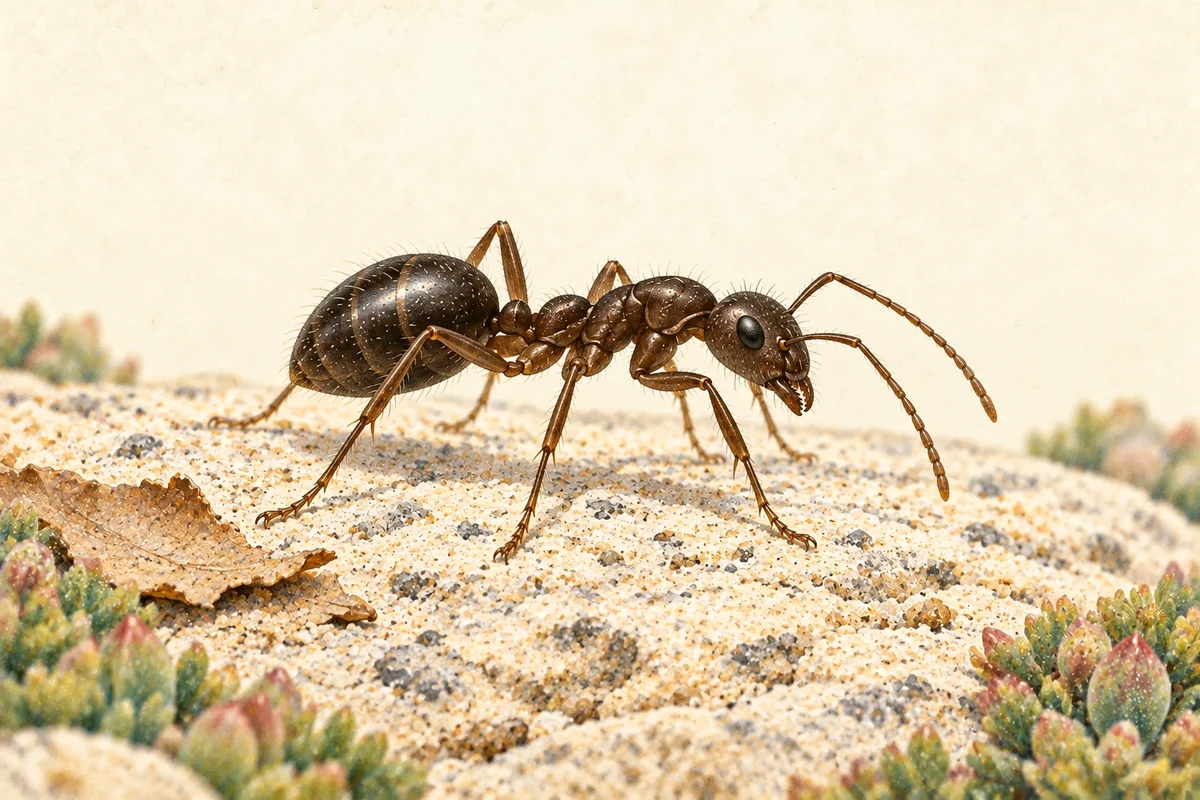
Illustration of a brown ant on sandstone

The San Diego field guide

Know your
neighbors.

A field guide to the ants around your home.

Identifying the species is the first step toward a thoughtful solution. Get to know common ants, their habits, and the clues they leave behind.

San Diego, CaliforniaObserve.
Identify. Understand.
People · Homes · Habitats

Small creatures.
Big connections.

Rooted in observation. Guided by nature.32.7157° N   117.1611° W

Your neighborhood field guide

Common ants to get to know

Open a field note to learn what to look for.

Different ants.
Different solutions.
FIELD NOTE / 01Field-guide illustration of a argentine antLong, continuous trails

Argentine ant

Linepithema humile

Size
2–3 mm
Color
Light to medium brown
Read field notes +

Where to look: Homes, yards, and irrigated landscapes.

Often seen in long, busy trails. Connected colonies can make a property-wide approach especially important.

Need help identifying it? →
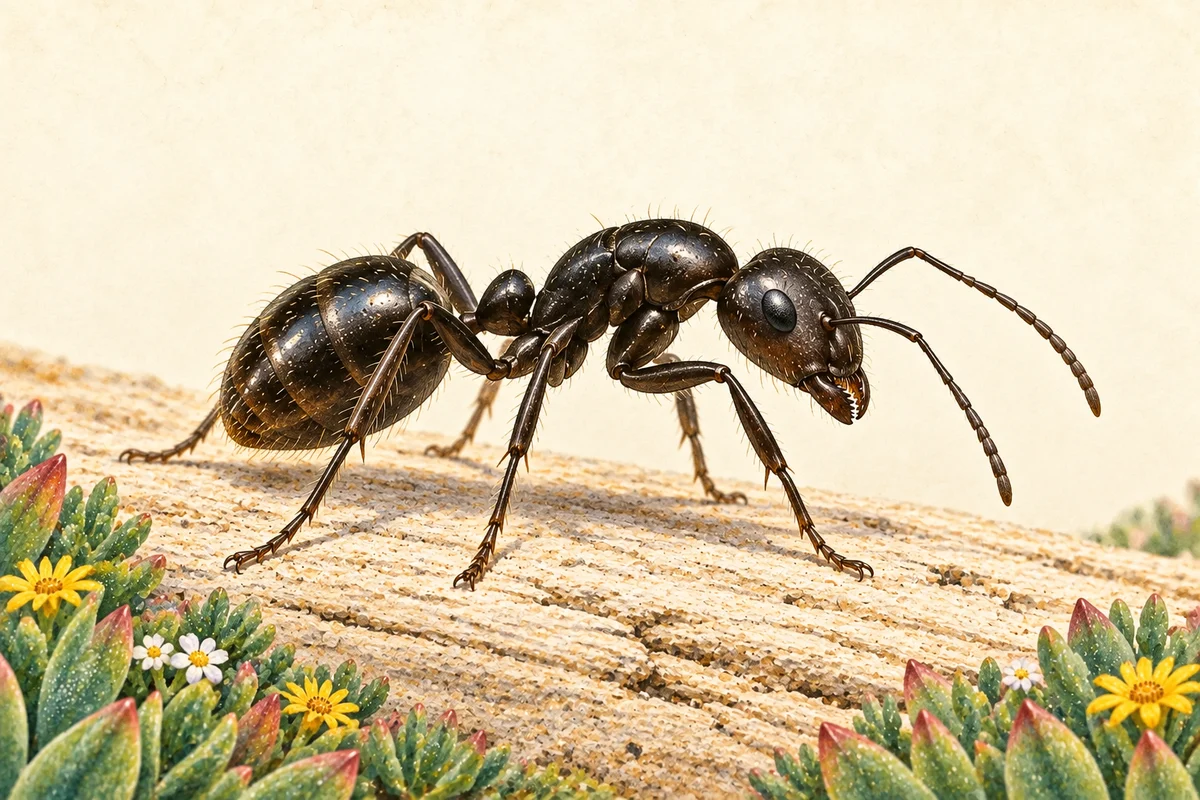
FIELD NOTE / 02Field-guide illustration of a carpenter antLarger workers; wood-associated nests

Carpenter ant

Camponotus spp.

Size
6–12 mm
Color
Black, red, or bicolored
Read field notes +

Where to look: Wood, trees, and structures.

Some species excavate wood for nests. They do not eat wood; identifying nesting conditions is part of understanding the problem.

Need help identifying it? →
FIELD NOTE / 03Field-guide illustration of a odorous house antDistinctive odor when crushed

Odorous house ant

Tapinoma sessile

Size
2–3 mm
Color
Dark brown to black
Read field notes +

Where to look: Indoors, under debris, and near moisture.

A small ant sometimes recognized by a distinctive odor when crushed. Use several characteristics together for identification.

Need help identifying it? →
FIELD NOTE / 04Field-guide illustration of a pavement antNests around paving and soil

Pavement ant

Tetramorium spp.

Size
2–4 mm
Color
Brown to black
Read field notes +

Where to look: Sidewalks, driveways, and soil.

Look for activity around cracks in paving and small soil deposits near entrances to a nest.

Need help identifying it? →
FIELD NOTE / 05Field-guide illustration of a fire antStinging ants; identification matters

Fire ant

Solenopsis spp.

Size
Varies by species and worker
Color
Often reddish brown
Read field notes +

Where to look: Open ground and soil nests.

Some fire ants sting. Avoid disturbing a suspected nest and request identification before choosing a treatment.

Need help identifying it? →
FIELD NOTE / 06Field-guide illustration of a velvety tree antTree-associated trails

Velvety tree ant

Liometopum occidentale

Size
Approximately 3–6 mm
Color
Bicolored, with a dark abdomen
Read field notes +

Where to look: Trees, wood, and nearby structures.

Often associated with trees and woody nesting sites. Follow activity back toward the surrounding landscape.

Need help identifying it? →

Illustrations and symbols are for orientation. Several characteristics are needed to identify an ant; a close-up photo or inspection can help. Learn more in the UC IPM ant guide.

Details lead to better solutions

How to observe ants

Size & color

Look at overall size and whether the body is uniform or bicolored.

Trail behavior

Are the ants moving in a steady trail or scattered around a space?

Nesting conditions

Notice nearby soil, wood, moisture, cracks, and vegetation.

Observe safely

Take a clear photo without disturbing a nest or handling the ants.

Our little corner of California

Proudly serving San Diego County

From coastal neighborhoods to inland communities, we’re here to help.

  • San Diego
  • La Jolla
  • Pacific Beach
  • Mission Valley
  • Point Loma
  • Kearny Mesa
  • Del Mar
  • Encinitas
  • Carlsbad
  • Chula Vista
  • El Cajon
From our coast
to your home.

A closer look is a good place to start

Ready for a more peaceful home?

Local knowledge. A thoughtful plan. A little peace of mind.

Request an inspection